by Rosario Charie Albar
 Las Vegas never fails to entertain. Even the non gambler will find an embarrassment of things to do starting with a relaxing day at the spa, a visit to one of several art museums, watching free Strip shows like the dancing fountains at Bellagio or the volcanic eruption at the Mirage, shopping at Caesar’s Forum Shops or at Fashion Mall, ATV driving across the Nevada wilderness, or indulging the palate at one of many fine restaurants like Postrio or Spago’s.
During the holidays there are the added attractions of gingerbread houses, Christmas décor that would please Santa, the kids and the child in all of us and techno lighted tannenbaum rivaling the colorful neon lights of the Vegas skyline. All these make strolling along the Strip at night a must for all visitors.
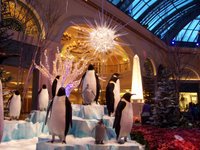
I had a lot of fun running around town before year’s end. It was special to get together with friends and relatives and personally wish them a prosperous new year, che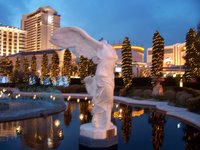 ck out the winter themed decorations of white bears and penguins at the Bellagio and the Impressionist Landscape (from Corot to Van Gogh) exhibition at their Gallery of Fine Art. Walking along the Strip, I found a Buddhist shrine, a replica of the Winged Victory of Samothrace, the Arc de Triomphe of Paris and gondolas gliding along clean Venetian waters.
That’s Vegas. It offers the world in a flashy platter without the requisite passport. But don't leave home without your Visa.
* * *
Photos by Rosario Charie Albar
 Las Vegas never fails to entertain. Even the non gambler will find an embarrassment of things to do starting with a relaxing day at the spa, a visit to one of several art museums, watching free Strip shows like the dancing fountains at Bellagio or the volcanic eruption at the Mirage, shopping at Caesar’s Forum Shops or at Fashion Mall, ATV driving across the Nevada wilderness, or indulging the palate at one of many fine restaurants like Postrio or Spago’s.
During the holidays there are the added attractions of gingerbread houses, Christmas décor that would please Santa, the kids and the child in all of us and techno lighted tannenbaum rivaling the colorful neon lights of the Vegas skyline. All these make strolling along the Strip at night a must for all visitors.
I had a lot of fun running around town before year’s end. It was special to get together with friends and relatives and personally wish them a prosperous new year, che
 ck out the winter themed decorations of white bears and penguins at the Bellagio and the Impressionist Landscape (from Corot to Van Gogh) exhibition at their Gallery of Fine Art. Walking along the Strip, I found a Buddhist shrine, a replica of the Winged Victory of Samothrace, the Arc de Triomphe of Paris and gondolas gliding along clean Venetian waters.
That’s Vegas. It offers the world in a flashy platter without the requisite passport. But don't leave home without your Visa.
* * *
Photos by Rosario Charie Albar