
ARTZUID 2025

Der Vogel (bird), Armando, 2012, bronze
ARTZUID, the Amsterdam Sculpture Biennale is celebrating its 9th season. I’ve been lucky to have attended the last three outdoor exhibitions in 2021, 2023 and now, 2025. The sculptures are on display in Amsterdam Zuid particularly in the neighborhoods of Apollolaan and Minervalaan where towering trees form the backdrop for the seventy sculptural pieces by established international artists as well as Dutch artists. This year’s edition includes works by Jaume Plensa, Nelson Carrilho and Jean Marie Appriou. The sculptural pieces in the free outdoor exhibition are thought provoking, engaging and fun as you’ll see from the images I’ve posted here. Artzuid 2025 runs through September 21, 2025. 
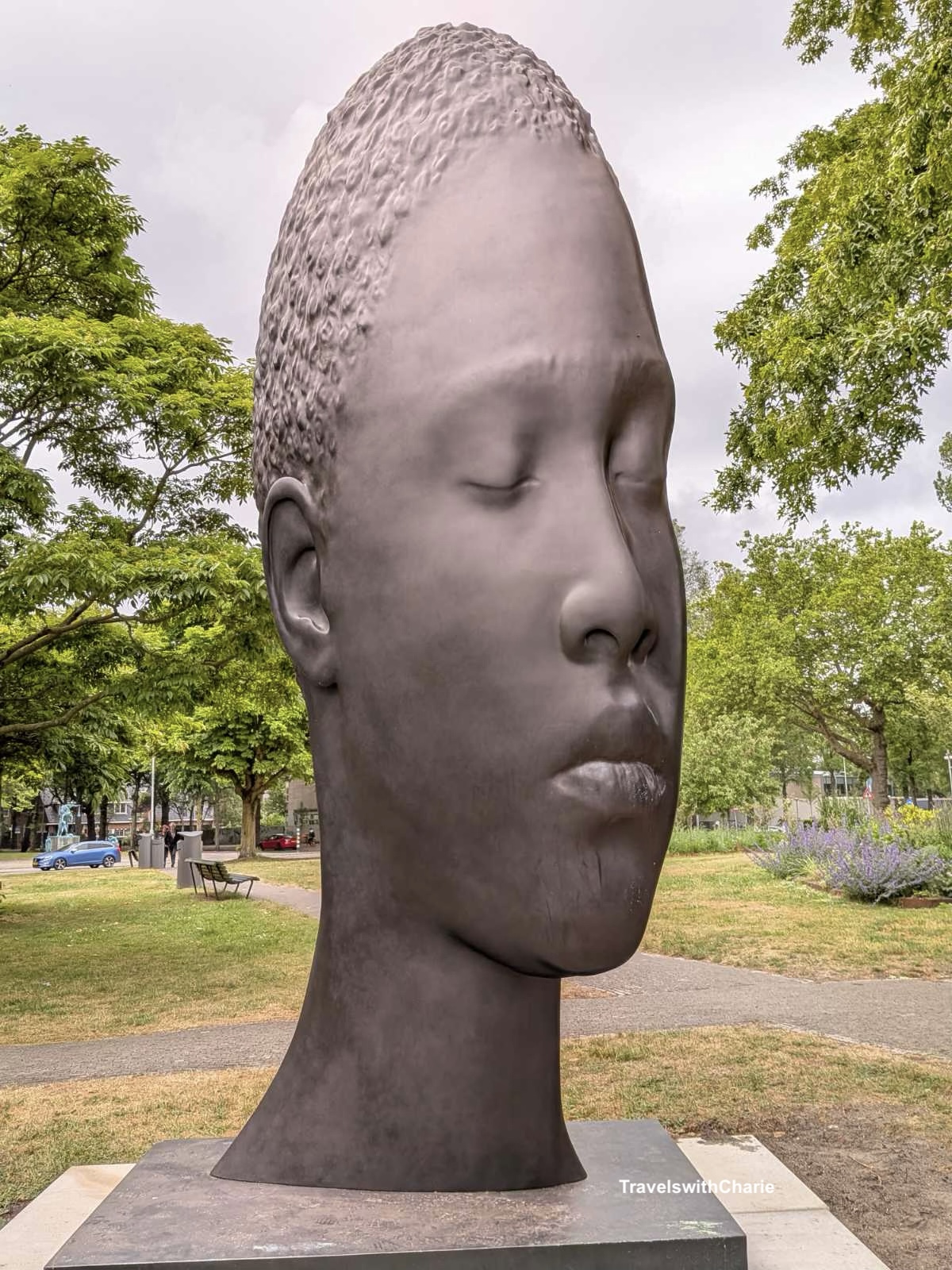
Yolandita, Jaume Plensa, 2024, bronze

Inhebantu from the Kuchu Eastern Busoga Kingdom, Leilah Babirye, 2023-2024
glazed ceramic, wire, bicycle tire inner tubes and found objects

The Ones XI, Mickey Hoogendijk, 2024, bronze

Horizons, Jean Marie Appriou, 2023, aluminum
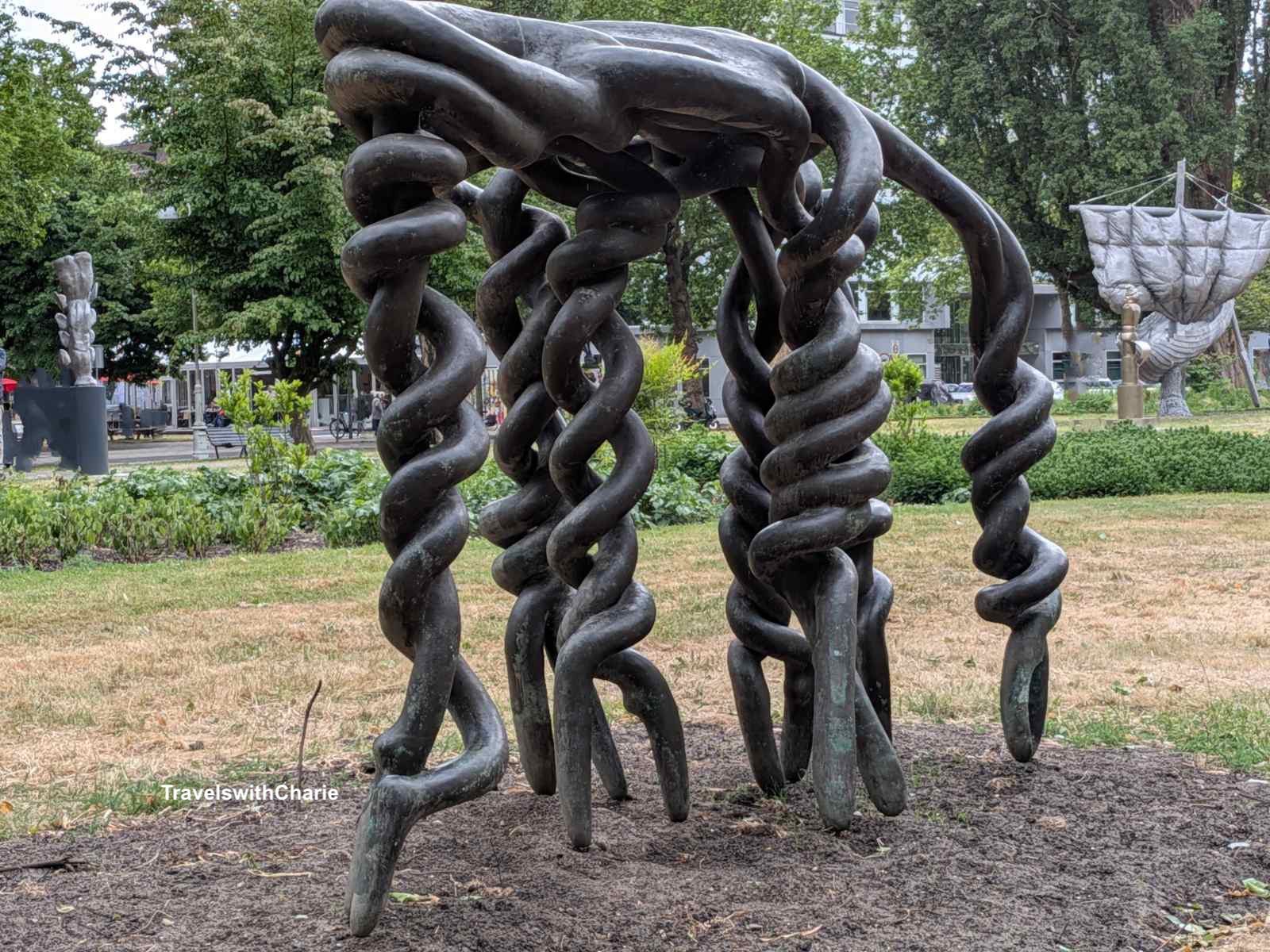
Verknoopt, Louise Schouwenberg, 1954, bronze

Rug People, Paloma Varga Weisz, 2011, patinated bronze

Figure with Three Birds, Leiko Ikemura, 2021, patinated bronze

Sculpture of a Seated Boy, Magdalena Abakanowicz, 2002, iron

Sculpture of a Seated Boy, Magdalena Abakanowicz, 2002, iron
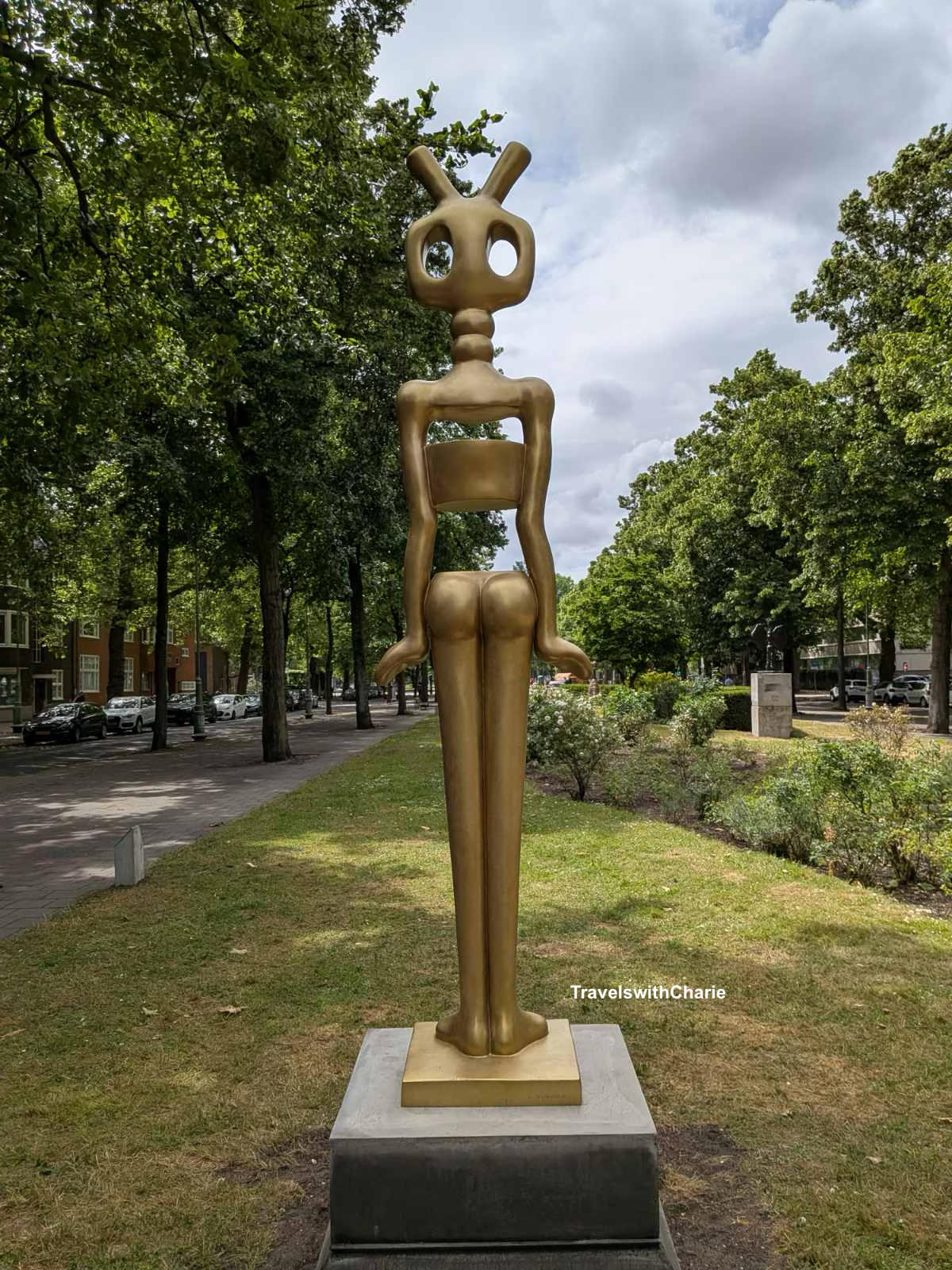
Respect and Integrity, Carin Scholten, 2025, bronze

Respect and Integrity, Carin Scholten, 2025, bronze

Untitled, Maja van Hall Blom, 1978/79, bronze

Zaaddrager, Heike Luuk, 1993, bronze

Amma, Lina Iris Viktor, 2024, 
lost waxcast, silica bronze, stainless steel mounting brackets

Annex #4, Rob Voerman, 2006,
car, steel, plexiglass, stained glass, screws

Annex #4, Rob Voerman, 2006,

Apex, Ricardo van Eyk, 2025, steel and aluminum

Negritude and the Loss of Virginity, Nelson Carrilho

Migrant, Tony Cragg, 2015, bronze

The Adventure of Freedom, Stefan Rinck, 2025, limestone

The Owl of Life, Stefan Rinck

Bat, TalR, 2019


Monument for the Future, Ivan Cremer

Bloc’s Party, Kathleen Vinck

Channel Liberty (with Fallen Arm), Arlene Shechet

Clarad, Esther Jiskoot

Matter Motion, Alicja Kwade, 2020

Inverse, Rob Schreefel, 2019, granite

Magnified no. 3, Magnified no. 4, Chris Peterson, 2023, granite

De Roeptoeter, David Bade, 2024, plastic

Detail of De Roeptoeter, David Bade, 2024, plastic

Silhouette II, Lotta Blokker, 2013, bronze

Nachhut, Neo Rauch, 2011, patinated bronze

Zonder Titel, Tirzo Martha, 2024, mixed media

Seaweed Skeleton no. 8, Margo Berkman, 2025,
(the remains of a former kelp forest)
concrete, steel, corrugated cardboard, epoxy, topcoat, concrete cobblestone

Wacht, Erik Buijs, 2025, aluminum
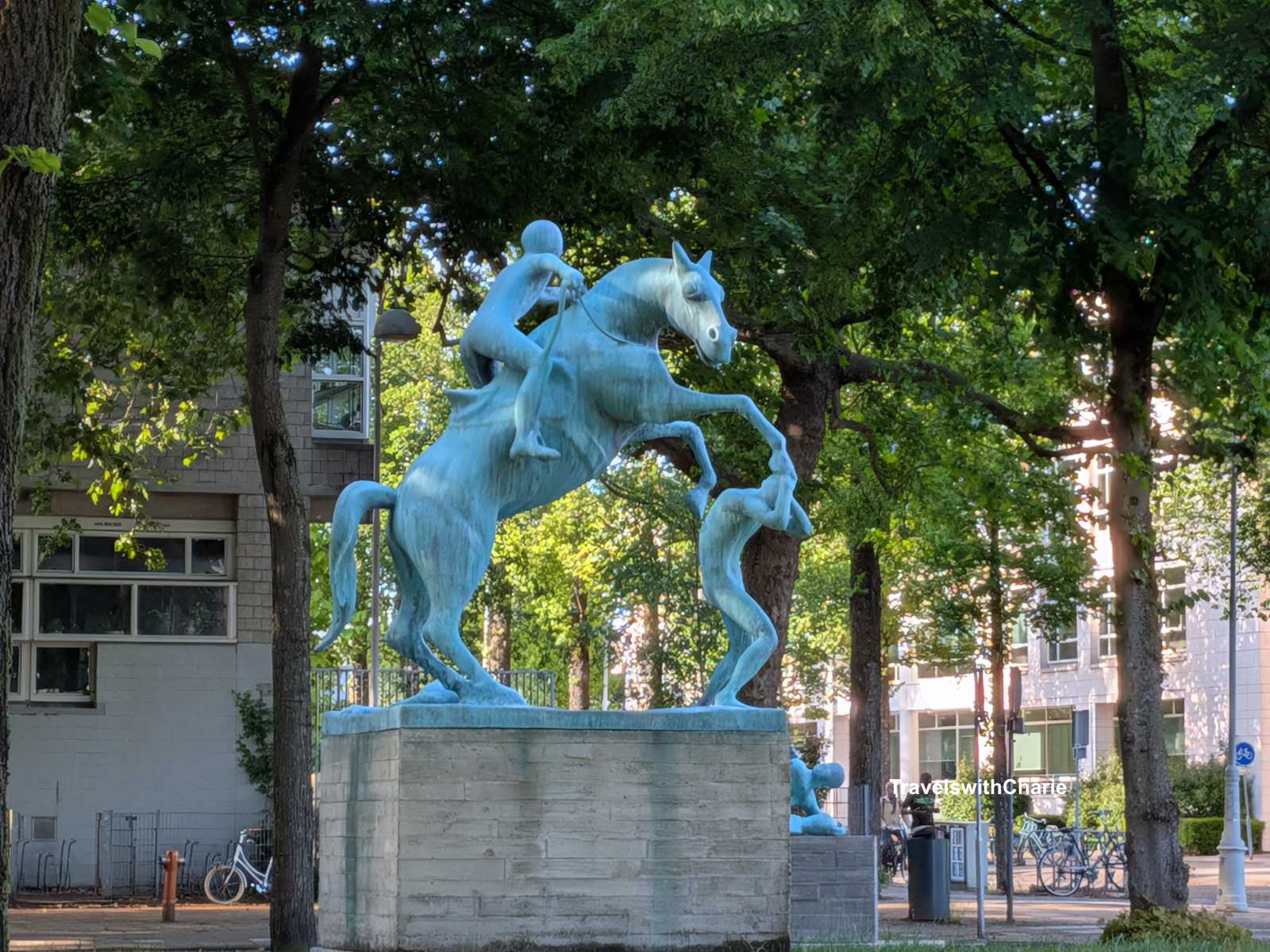
The Monument Group, Atelier van Lieshout

Yoshitomo Nara
For detailed information about the artworks posted here, visit the Instagram account of Artzuid under the same name. 

How to get to the Apollolaan/Minervalaan:
Uber from Leidseplein to Apollolaan in front of the Hilton is approximately €12. Or tram #24 from Central Station. Follow this link reisinfo.gvb.nl for tram information. For the map of the exhibition route, check artzuid.nl

Links to previous ARTZUID exhibitions:
2023
2021

Stay connected


*****

Images by TravelswithCharie


Popular posts from this blog

Brașov was once called Stalin City

White Tower Brașov is a city nestled in the Carpathian Mountains in Transylvania. Remnants of its medieval fortifications and bastions are added attractions to this buzzing city. The White Tower along with the Black Tower are two of the remaining watchtowers still visible today. During the Communist period,  Brașov  was called Orasul Stalin or Stalin City after the Soviet leader, Joseph Stalin. Black Church This is such a storied Gothic church which was originally the Catholic Church of St. Mary before it was converted to a Lutheran Church. It was believed to have been affected by fire in 1689 which blackened its exterior walls and roof. But a new 21st century study reveals that this wasn’t the case at all. The only reason for its blackened state according to the study is environmental pollution caused by the industrialization of Brasov in the 19th century. The walls have since been cleaned but there are traces of black spots on the roof.  Republicii Street This long pede...

The Gold of Ancestors: Pre-Colonial Philippine Treasures

Openwork basket, Surigao, 10th-13th century What a wonderful surprise this exhibition is! These gold objects, about a thousand of them, add a rich layer to Philippine history. This collection which was found in various sites in the Philippines, date back to the 10th-13th centuries. It demonstrates the well developed culture of pre colonial Philippines which the Spaniard, Antonio Pigafetta, recorded in 1521 when Ferdinand Magellan landed in the islands. A thriving interchange between the Philippines and its Asian neighbors existed prior to the arrival of Magellan as attested by some of these gold accouterments which show for example, images from Hindu mythology. The motifs and curvilinear ornamentation of the openwork basket (shown above) intimate Chinese designs found in their ceramics and textiles.  Torso ornament, 10th-13th century Weighing four kilos of gold, this sash is worn across the chest similar to the  upavita (sacred thread)  style in Hindu culture. This sash w...

The Art of Carlos Botong Francisco - Progress of Medicine in the Philippines

Pre-colonial period Pag-unlad ng Panggagamot sa Pilipinas (The Progress of Medicine in the Philippines) is a group of four large-scale paintings depicting healing practices in the Philippines from pre-colonial times to the modern period. Carlos Botong Francisco was commissioned in 1953 by  Dr. Agerico Sison who was then the director of Philippine General Hospital (PGH) together with   Dr. Eduardo Quisumbing of the National Museum, Dr. Florentino Herrera, Jr. and Dr. Constantino Manahan. These oil on canvas paintings measure 2.92 meters in height and 2.76 meters in width (9.71 ft x 8.92 ft) and were displayed at the main entrance hall of PGH for over five decades. Owing to its location, the artworks were in a state of "severe deterioration" at the beginning of the 21st century from exposure to heat, humidity, dirt, dust, smoke, insect stains, grime, termites and an oxidized synthetic resin used in an earlier restoration. These canvases were restored three times, the last was...