
The Garden of Time at the Bellagio Conservatory

The colors of Autumn are magical. And Bellagio Conservatory creates vibrant vignettes with orange, red and green foliage and flowers of the season. It’s always a pleasure to wander in the garden despite the number of visitors who can’t take enough photos of the variety of pumpkins on display and the colorful arrangements of flowers and plants. This year’s theme is the Garden of Time hence the clocks on display as well as petrified wooden animals in this enchanted forest where time stands still. The display is only through November 9th. So if you’re in Vegas, make sure to stop by the Conservatory.


These gourds are big and quite heavy.

Chrysanthemums and elaeagnus olive martini offer contrasting hues.

Coleus in rich colors pop in this vignette with white, orange and green pumpkins.

This orange pumpkin registers at 749 pounds.

This pumpkin weighs 630 pounds.

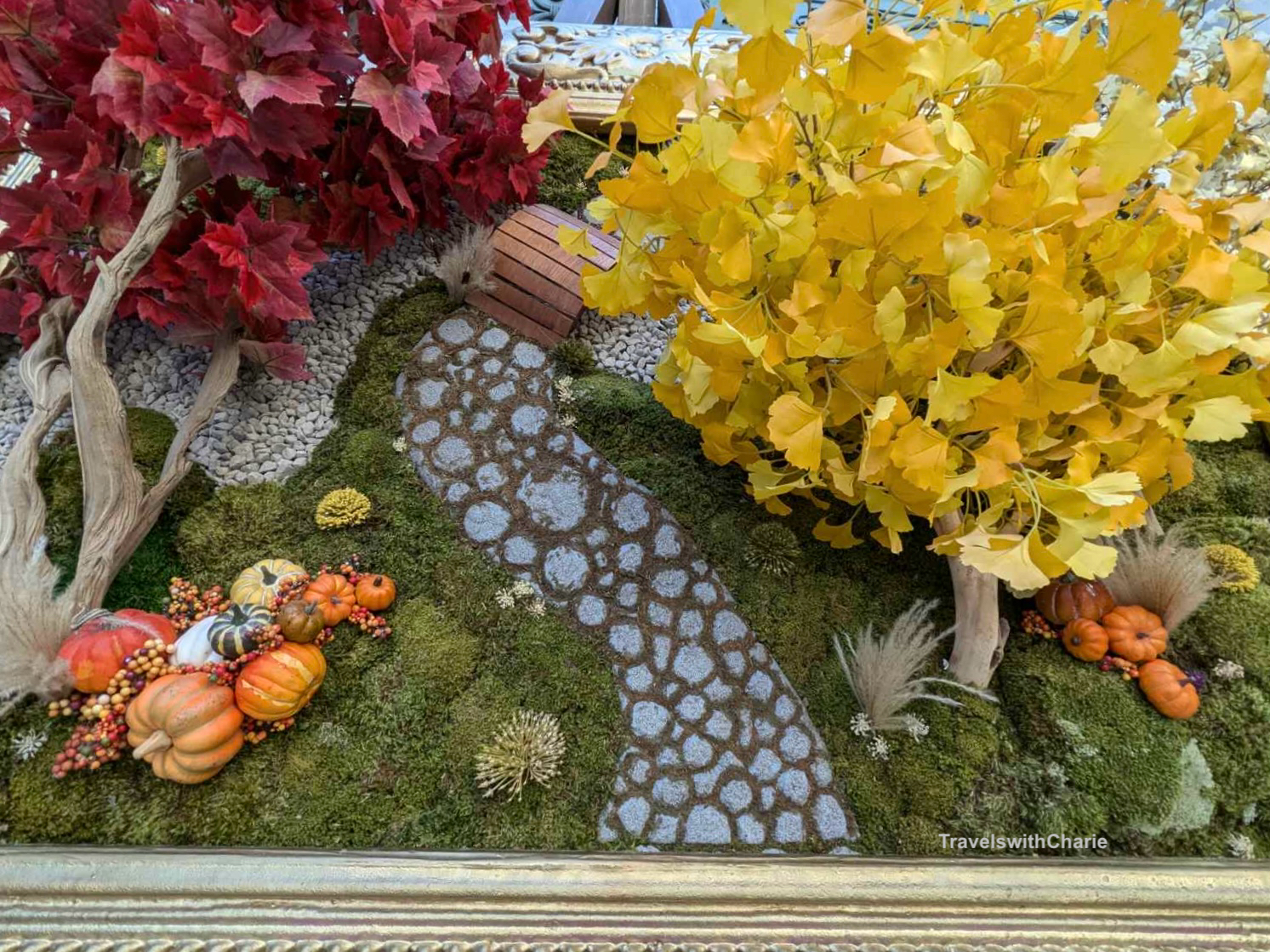
Check out this three dimensional work of art. The detail is astonishing especially the miniature pumpkins.

Waterfalls provide calming music to the ears.


The Garden of Time.
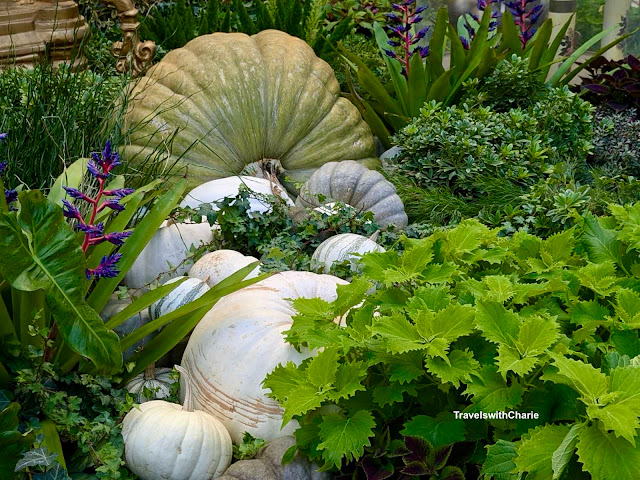
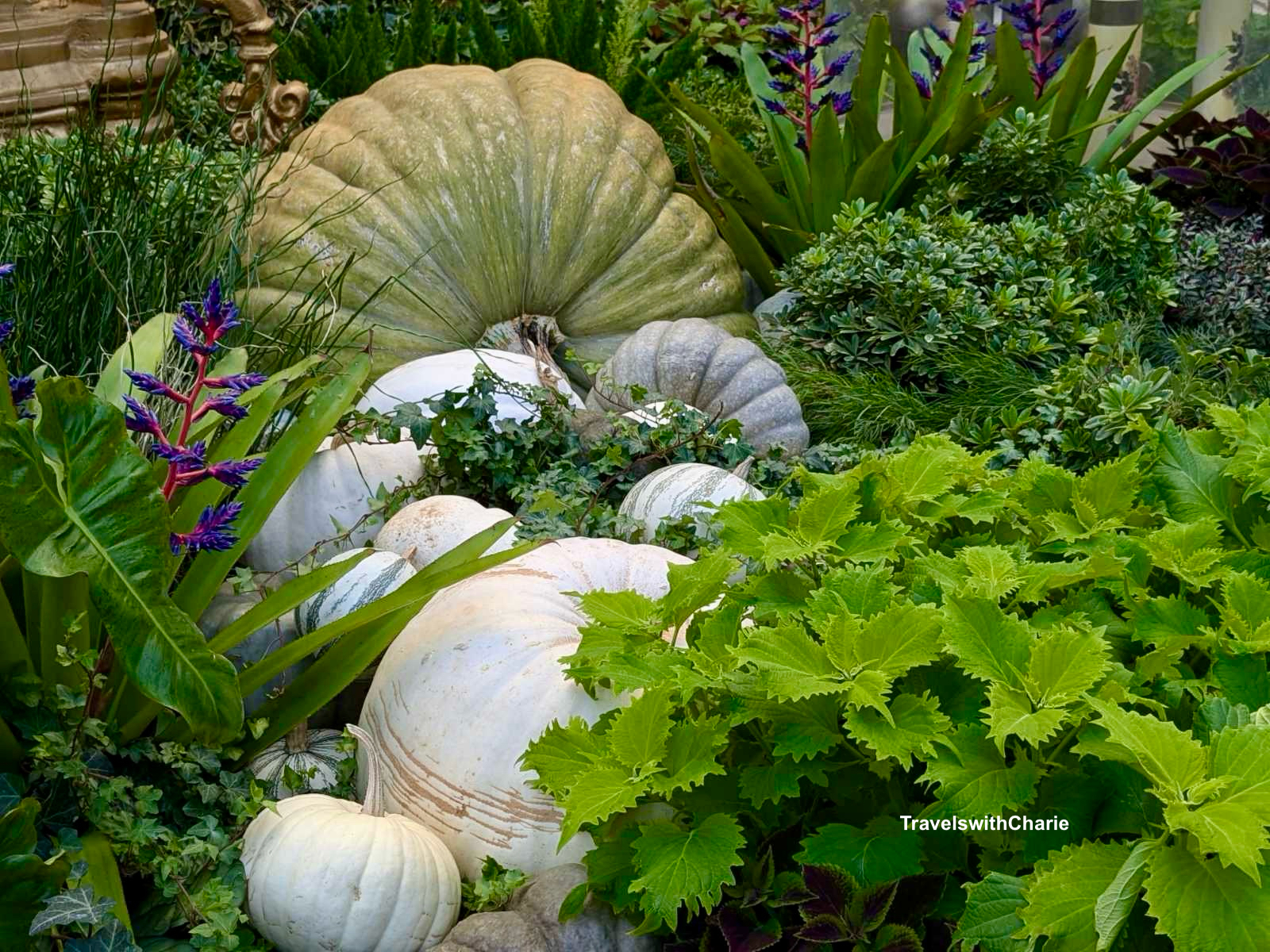
Notice the stunning Blue Tango bromeliads. 

Bellagio Hotel Conservatory and Gardens
3600 S. Las Vegas Blvd.
Las Vegas, Nevada

Stay connected


*****

Images by TravelswithCharie 


Popular posts from this blog

The Art of Carlos Botong Francisco - Progress of Medicine in the Philippines

Pre-colonial period Pag-unlad ng Panggagamot sa Pilipinas (The Progress of Medicine in the Philippines) is a group of four large-scale paintings depicting healing practices in the Philippines from pre-colonial times to the modern period. Carlos Botong Francisco was commissioned in 1953 by  Dr. Agerico Sison who was then the director of Philippine General Hospital (PGH) together with   Dr. Eduardo Quisumbing of the National Museum, Dr. Florentino Herrera, Jr. and Dr. Constantino Manahan. These oil on canvas paintings measure 2.92 meters in height and 2.76 meters in width (9.71 ft x 8.92 ft) and were displayed at the main entrance hall of PGH for over five decades. Owing to its location, the artworks were in a state of "severe deterioration" at the beginning of the 21st century from exposure to heat, humidity, dirt, dust, smoke, insect stains, grime, termites and an oxidized synthetic resin used in an earlier restoration. These canvases were restored three times, the last was...

Filipino Struggles in History - Carlos Botong Francisco

In 1968, Antonio Villegas (then Mayor of Manila), commissioned Carlos "Botong" Francisco to paint the history of Manila for Manila City Hall. The series of large scale paintings was called  Kasaysayan ng Maynila  (History of Manila).  The paintings deteriorated over time and no attempt was made to preserve these historical canvases until 2013 when Mayor Amado Lim sent them to the National Museum for extensive restoration. Four years later, in 2017, Mayor Joseph Ejercito Estrada and the Manila City Council signed an agreement with the National Museum to leave the paintings at the museum so they may reach a larger audience in exchange for museum grade reproductions to replace the originals. Kasaysayan ng Maynila was later renamed Filipino Struggles in History and is now on display at the Senate Hall of the National Museum . Carlos "Botong" Francisco died in March 1969, a few months after completing the paintings. He is one of the first Filipino modernists and...

The Painted Monasteries of Bucovina

Church of the Beheading of St. John, Arbore Monastery Tucked away in the northeastern corner of Romania lies the enchanting region of Bucovina, home to a treasure trove of stunning monasteries. The Painted Monasteries of Bucovina, collectively a UNESCO World Heritage Site, are a testament to the region's rich history, spirituality and artistic genius. One of the most visited monasteries in Bucovina is Voronet. It was commissioned by Stefan the Great, Voivode of Moldova and one of its most admired rulers. Moldova was  a medieval state that once encompassed parts of present-day Romania, Ukraine, and Moldova. Voronet  was built in 1488 to commemorate his victory over the Ottoman Turks in the Battle of Vaslui and it was miraculously completed in three months time. Succeeding  princes of Moldova continued the construction of more magnificent monasteries. The exterior walls of these structures were adorned with intricate frescoes, depicting biblical scenes, saints, and...